
Switchboard
Wrapping up the Roadshow, making sense of it all and next steps!

The Local Food Switchboard is a new initiative of the Maine Food Convergence Project designed to connect Maine’s farmers, fishermen, and food businesses with the processing, storage, and distribution infrastructure, markets, and resources they need to thrive. Learn more at Local Food Switchboard.

Research Roadshow Update & Upcoming Sensemaking Sessions
That’s a wrap on the Research Roadshow! Between April and June, our team visited all nine of Maine’s regions, hosting ten community gatherings across the state.
We supplemented these Roadshow events with additional research and outreach—including one-on-one interviews, focus groups, digital surveys, and more— and we’re excited to share what we’ve learned. Now, we’re inviting you to help us interpret these findings and chart the next steps!
That’s why we’re hosting three digital Research Findings and Sensemaking Sessions. During each session, we will:
Share themes, learnings, and early insights from our research so far;
Invite you to confirm, challenge, and deepen our understanding of the key findings; and
Collectively determine how these insights should shape the next phase of the Switchboard.
We’ll be hosting these identical sense-making sessions at three different times. Join us on Zoom at the time that works best for you:
Session #1: Tuesday, July 8 from 11:00 am – 12:30 pm (click here to register for session #1)
Session #2: Tuesday, July 8 from 6:00 – 7:30 pm (click here to register for session #2)
Session #3: Wednesday, July 9 from 8:00 – 9:30 am (click here to register for session #3)

During the Research Roadshow, our conversations delved into themes such as supply‐chain infrastructure gaps, storage and distribution challenges, alignment of procurement cycles with school and producer calendars, the interplay between digital tools and human relationships, and strategies for equitable, sustainable local food sourcing. Here are highlights from each region we visited this month:
Hancock County (June 4th)
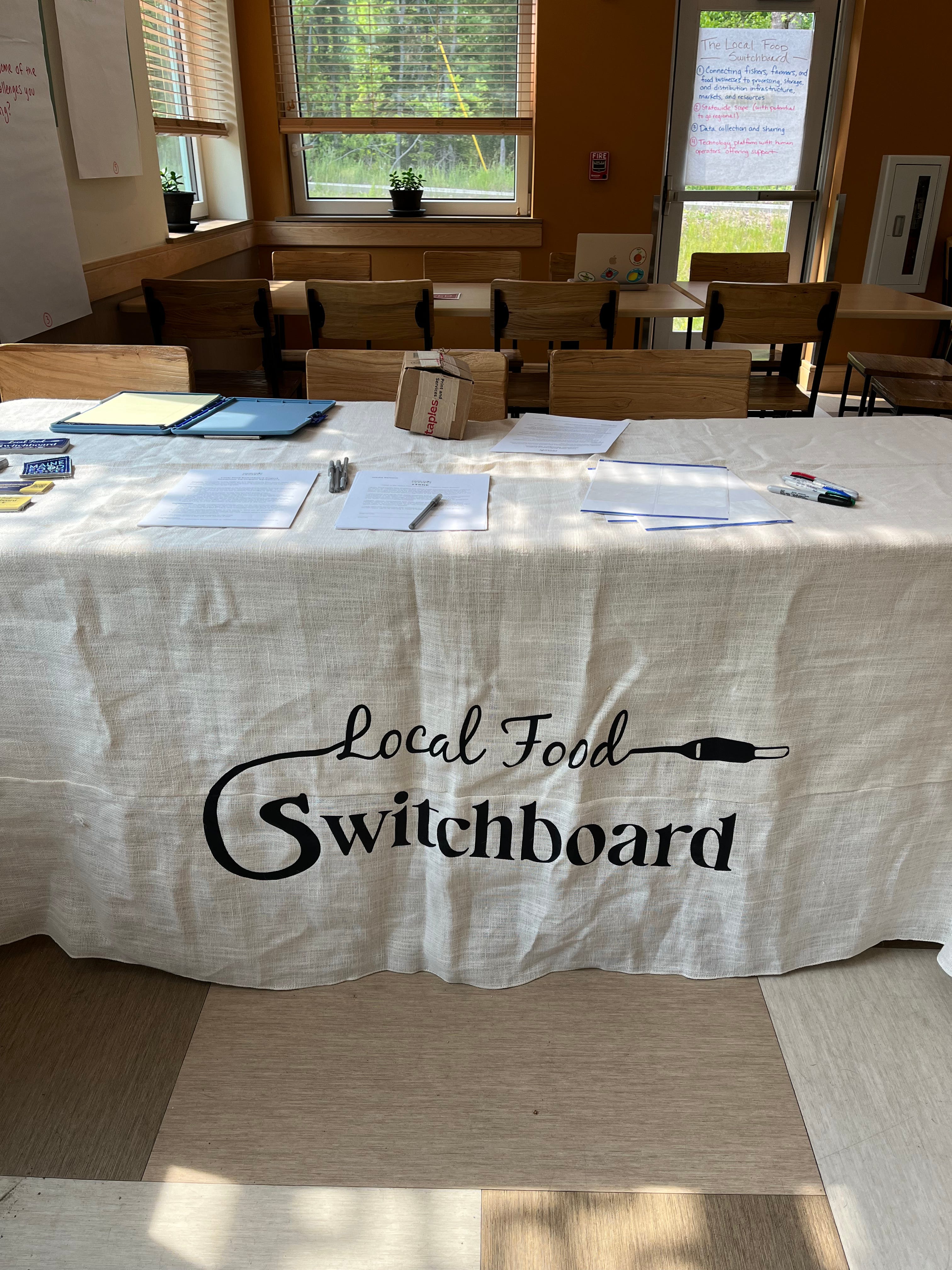
At the Blue Hill Co-op, school nutrition directors and community members celebrated a clear appetite for local food but flagged persistent barriers. These include limited staff capacity to clean and process produce, alongside delivery windows that do not align with school schedules, forcing reliance on larger distributors. Attendees also noted that many valuable assets—like shared commercial kitchen spaces and business supports—remain under the radar, underscoring the need for an information source that stays flexible and deeply rooted in local rhythms and relationships.
Oxford & Franklin Counties (June 9th)
At the Region 9 School of Applied Technology in Mexico, a farmer and food council leader described year-over-year growth in local food sales—powered by forward-purchasing pilots with hospital- and faith-based food pantries—and, alongside school nutrition directors, pinpointed coordination hurdles around last-minute orders, misaligned delivery windows, and aggregation minimums. They envisioned a CSA-style forward-contracting model and winter buying period to secure commitments in advance, and stressed that the Switchboard must highlight regional assets and existing initiatives, such as cold storage and shared kitchens, to sustain community engagement and ensure follow-through.
York County (June 17th)
At The Ecology School in Saco, chefs, farmers, school nutrition staff, food access and community organizations voiced eagerness for cross-sector collaborations, but pointed to ongoing delivery and cold-storage gaps that strain limited budgets and staff time. Participants expressed excitement about a planned food hub in Biddeford and offered ideas for more strategic use of school kitchens. They also called for better information-sharing tools, grant-writing support, and exploration of alternative models of food service management to foster an equitable, resilient food system.
Androscoggin County (June 18th)
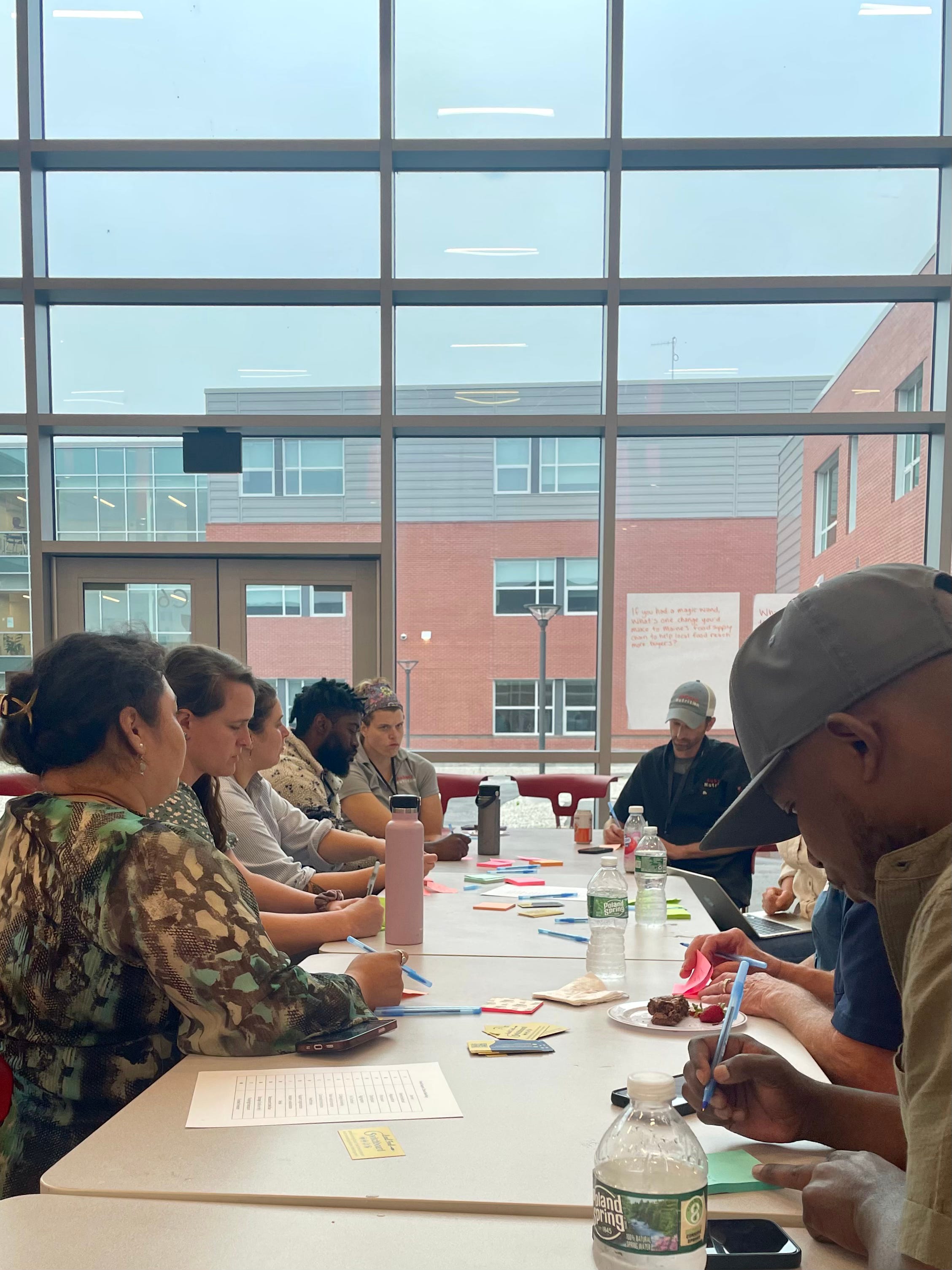
At Edward Little High School in Auburn, farmers, distributors, school nutrition directors, and community organizations underscored critical infrastructure gaps—storage, processing, aggregation, and distribution—that limit efficient local procurement. They expressed strong enthusiasm for digital tools that connect supply-chain actors in real time via multilingual, user-friendly platforms, and highlighted the cultural and economic challenges of competing with cheap global food, emphasizing the importance of fair pricing and education on culturally relevant, nourishing local foods.
Cumberland County (June 23rd)
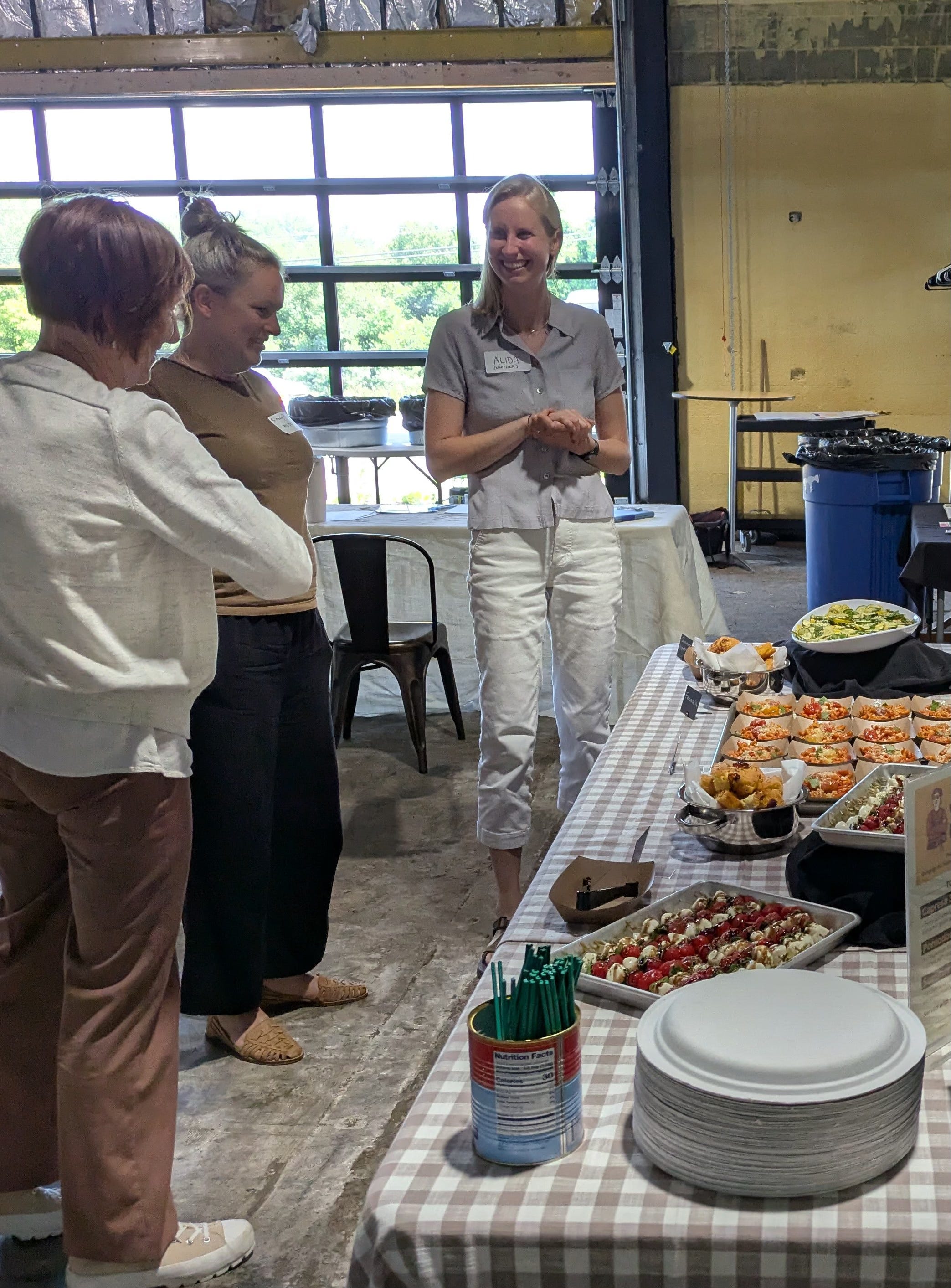
At Fork Food Lab in South Portland, participants discussed how district size, remoteness, and the cultural diversity of student populations influence budgets, staff capacity, distribution logistics, and menu planning—underscoring the need for solutions that accommodate small rural districts, larger urban systems, as well as multicultural communities. School nutrition staff praised Harvest of the Month for making it easier to integrate local foods into meals and boosting student engagement, and stressed that translating producer spec sheets into USDA Food Buying Guide language would help streamline communication between producers and schools, clarifying ordering requirements and supporting district-specific procurement processes.

As we transition from gathering insights to putting them into action, here’s a look at what’s coming up for the Local Food Switchboard:
Youth Research Team Onboarding
This week, we’ll welcome and onboard our Youth Data Collection Team—a paid cohort of student researchers who will support the Switchboard throughout the summer. Starting in late June, they’ll gather and synthesize data for our platform: mapping farms, processors, and storage facilities; conducting interviews; and collecting school-food stories. Their schedule includes weekly virtual and in-person check-ins, independent research hours, and monthly Switchboard Advisory Team meetings. We can’t wait to introduce each of them in our next newsletter!
Platform Design & Pilot Timeline
With our sensemaking sessions complete in early July, we’ll move from listening to building. We’ll convene farmers, fishers, processors, distributors, school nutrition staff, and community partners in a hands-on co-design workshop to sketch and test the core elements of the Switchboard—how users find one another, list available products and infrastructure, and coordinate orders—ensuring every feature reflects real-world needs.
Drawing on those insights, our team will assemble a working prototype and invite a small group of school districts to pilot it this winter. Supported by the Switchboard Operator, these partners will help us uncover any friction in useability, information accuracy, or communication, so we can refine the platform before rolling it out more widely later in 2026.